Présentation de l'éditeur
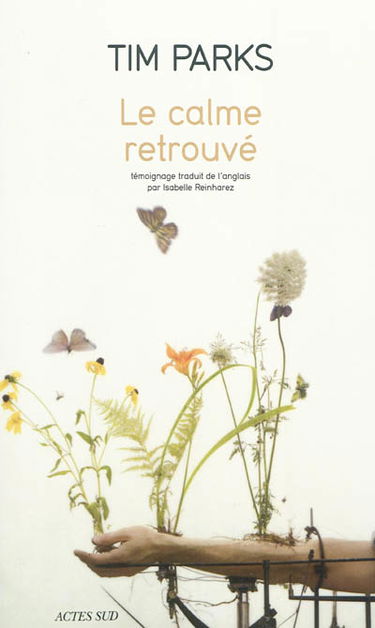
Three months after returning to England, Christopher Burton, receives a phone-call at the reception desk of the Rembrandt Hotel, Knightsbridge that informs him of his son's suicide. But why on receiving this terrible news, does Burton immediately decide that he must leave his Italian wife of thirty years standing? Why does he find it so difficult to focus on his grief for his son? Intensely dramatic, dark and, against all odds, hilariously funny, Destiny is a satisfying story and a profound meditation on marriage and identity. Parks gives us a frightening experience of what it means to tread the narrow line between sanity and psychosis.
Revue de presse
This brilliant work fizzes with bleak humour and a crackpot energy... a powerfully affecting novel of married life and cultural incompatability... Parks is an exceptionally acute observer of modern life ―
Daily Telegraph
Tim Parks masterly new novel is... intellectually sophisticated, formally ambitious, and belongs to a cosmopolitan European tradition. But it is one that pays honour to the heart as well as to the mind ―
Sunday Times
Complex but captivating and exactly observed... A book to digest slowly and savour ―
The Times
A wilful, hypnotic novel...
Destiny gleams with insights into the trade-off between the personal and the political... a stylish, ambitious novel of a life in freefall ―
Time Out
He can write, at will, like a modern Henry James, proceeding with composure through the labyrinth... Indeed, this is a novel that seems to exist on the brink, on the edge of insanity ―
Literary Review
Biographie de l'auteur
Born in Manchester, Tim Parks grew up in London and studied at Cambridge and Harvard. He lives in Milan. Parks is the acclaimed author of novels, non-fiction and essays, including Europa, A Season with Verona, Teach Us to Sit Still, Italian Ways and Italian Life. He has been shortlisted for the Booker Prize and has won many awards for both his work in English and his translations from the Italian, which include works by Alberto Moravia, Italo Calvino, Roberto Calasso, Antonio Tabucchi and Niccolò Machiavelli.