Présentation de l'éditeur
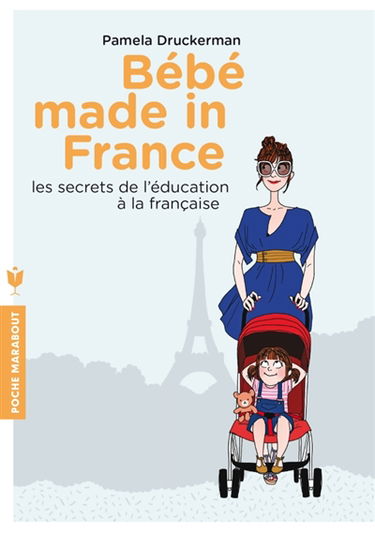
The secret behind France's astonishingly well-behaved children.
When American journalist Pamela Druckerman has a baby in Paris, she doesn't aspire to become a "French parent." French parenting isn't a known thing, like French fashion or French cheese. Even French parents themselves insist they aren't doing anything special.
Yet, the French children Druckerman knows sleep through the night at two or three months old while those of her American friends take a year or more. French kids eat well-rounded meals that are more likely to include braised leeks than chicken nuggets. And while her American friends spend their visits resolving spats between their kids, her French friends sip coffee while the kids play.
Motherhood itself is a whole different experience in France. There's no role model, as there is in America, for the harried new mom with no life of her own. French mothers assume that even good parents aren't at the constant service of their children and that there's no need to feel guilty about this. They have an easy, calm authority with their kids that Druckerman can only envy.
Of course, French parenting wouldn't be worth talking about if it produced robotic, joyless children. In fact, French kids are just as boisterous, curious, and creative as Americans. They're just far better behaved and more in command of themselves. While some American toddlers are getting Mandarin tutors and preliteracy training, French kids are- by design-toddling around and discovering the world at their own pace.
With a notebook stashed in her diaper bag, Druckerman-a former reporter for The Wall Street Journal-sets out to learn the secrets to raising a society of good little sleepers, gourmet eaters, and reasonably relaxed parents. She discovers that French parents are extremely strict about some things and strikingly permissive about others. And she realizes that to be a different kind of parent, you don't just need a different parenting philosophy. You need a very different view of what a child actually is.While finding her own firm non, Druckerman discovers that children-including her own-are capable of feats she'd never imagined.
Extrait
contents
Some names and identifying details have been changed to protect the privacy of the individuals involved.
glossary of french parenting terms
attend (ah-tahn)—wait, stop. A command that a French parent says to a child. “Wait” implies that the child doesn’t require immediate gratification, and that he can entertain himself.
au revoir (oh-reh-vwa)—good-bye. What a French child must say when he leaves the company of a familiar adult. It’s one of the four French “magic words” for kids. See bonjour.
autonomie (oh-toh-no-mee)—autonomy. The blend of independence and self-reliance that French parents encourage in their children from an early age.
bêtise (beh-teeze)—a small act of naughtiness. Labeling an offense a mere bêtise helps parents respond to it with moderation.
bonjour (bohn-juhr)—hello, good day. What a child must say when he encounters a familiar adult.
caca boudin (caca booh-dah)—literally, “caca sausage.” A curse word used almost exclusively by French preschoolers.
cadre (kah-druh)—frame, or framework. A visual image that describes the French parenting ideal: setting firm limits for children, but giving them tremendous freedom within those limits.
caprice (kah-preese)—a child’s impulsive whim, fancy, or demand, often accompanied by whining or tears. French parents believe it is damaging to accede to caprices.
classe verte (klass vehr-tuh)—green class. Beginning in about first grade, a class trip in which students spend a week or so in a natural setting. The teacher chaperones, along with a few other adults.
colonie de vacances (koh-loh-nee duh vah-kahnce)—vacation colony. One of hundreds of group holidays for kids as young as four, without their parents, usually in the countryside.
complicité (kohm-plee-see-tay)—complicity. The mutual understanding that French p