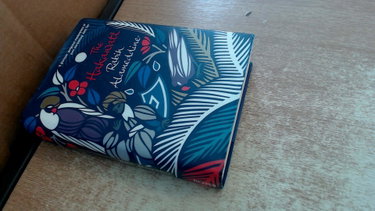
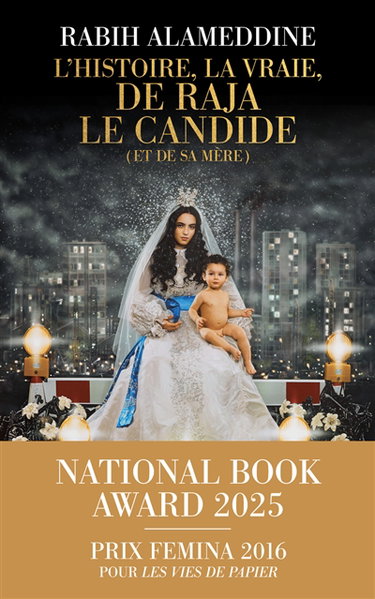
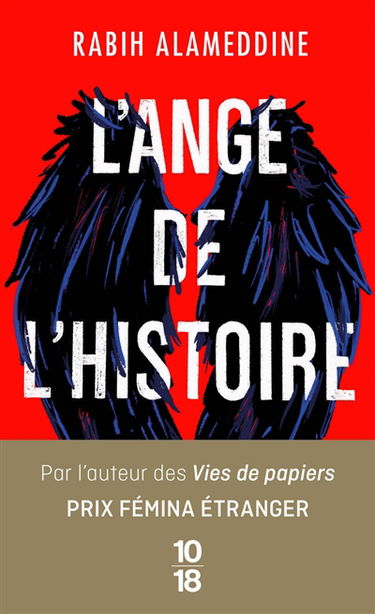
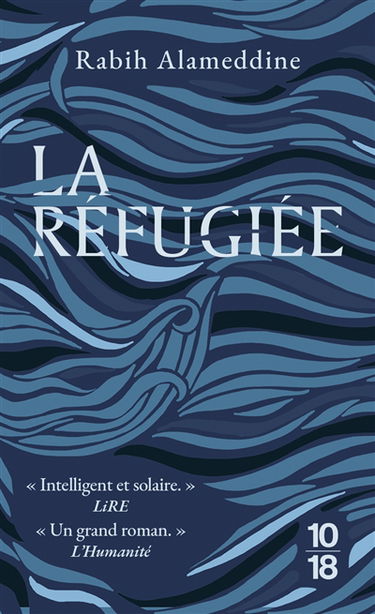
Présentation de l'éditeur
“Here is absolute beauty. One of the finest novels I’ve read in years.” —Junot Diaz
An astonishingly inventive, wonderfully exuberant novel that takes us from the shimmering dunes of ancient Egypt to the war-torn streets of twenty-first-century Lebanon.
In 2003, Osama al-Kharrat returns to Beirut after many years in America to stand vigil at his father’s deathbed. The city is a shell of the Beirut Osama remembers, but he and his friends and family take solace in the things that have always sustained them: gossip, laughter, and, above all, stories.
Osama’s grandfather was a hakawati, or storyteller, and his bewitching stories—of his arrival in Lebanon, an orphan of the Turkish wars, and of how he earned the name al-Kharrat, the fibster—are interwoven with classic tales of the Middle East, stunningly reimagined. Here are Abraham and Isaac; Ishmael, father of the Arab tribes; the ancient, fabled Fatima; and Baybars, the slave prince who vanquished the Crusaders. Here, too, are contemporary Lebanese whose stories tell a larger, heartbreaking tale of seemingly endless war—and of survival.
Like a true hakawati, Rabih Alameddine has given us an Arabian Nights for this century—a funny, captivating novel that enchants and dazzles from its very first lines: “Listen. Let me take you on a journey beyond imagining. Let me tell you a story.”
Extrait
Listen. Allow me to be your god. Let me take you on a journey beyond imagining. Let me tell you a story.A long, long time ago, an emir lived in a distant land, in a beautiful city, a green city with many trees and exquisite gurgling fountains whose sound lulled the citizens to sleep at night. Now, the emir had everything, except for the one thing his heart desired, a son. He had wealth, earned and inherited. He had health and good teeth. He had status, charm, respect. His beautiful wife loved him. His clan looked up to him. He had a good pedicurist. Twenty years he had been married, twelve lovely girls, but no son. What to do?He called his vizier. “Wise vizier,” he said. “I need your help. My lovely wife has been unable to deliver me a son, as you know. Each of my twelve girls is more beautiful than the other. They have milk-white skin as smooth as the finest silk from China. The glistening pearls from the Arabian Gulf pale next to their eyes. The luster of their hair outshines the black dyes from the land of Sind. The oldest has seventeen poets singing her praises. My daughters have given me much pleasure, much to be proud of. Yet I yearn to see an offspring with a little penis run around my courtyard, a boy to carry my name and my honor, a future leader of our clan. I am at a loss. My wife says we should try once more, but I cannot put her through all this again for another girl. Tell me, what can I do to ensure a boy?” The vizier, for the thousandth upon thousandth time, suggested his master take a second wife. “Before it is too late, my lord. It is obvious that your wife will not produce a boy. We must find someone who will. My liege is the only man within these borders who has only one wife.”The emir had rejected the suggestion countless times, and that day would be no different. He looked wistfully out onto his garden. “I cannot marry another, my dear vizier. I am terribly in love with my wife. She can be ornery now and then, vain for sure, petulant and impetuous, silly at times, ill-disposed toward the help, even malicious and malevolent when angry, but still, she has always been the one for me.”“Then produce a son with one of your slaves. Fatima the Egyptian would be an excellent candidate. Her hips are more than adequate; her breasts have been measured. A tremendous nominee, if I may say so myself.”“But I have no wish to be with another.”“Sarah offered her Egyptian slave to her husband to produce a boy. If it was good enough for our prophet, it can be good enough for us.”That night, in their bedroom, the emir and his wife discussed their problem. His wif