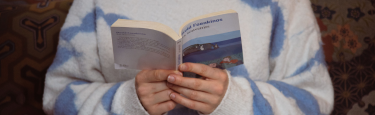
Présentation de l'éditeur
National Bestseller and Winner of the PEN/Faulkner Award for Fiction
Oscar Feldman, the renowned figurative painter, has passed away. As his obituary notes, Oscar is survived by his wife, Abigail, their son, Ethan, and his sister, the well-known abstract painter Maxine Feldman. What the obituary does not note, however, is that Oscar is also survived by his longtime mistress, Teddy St. Cloud, and their daughters.
As two biographers interview the women in an attempt to set the record straight, the open secret of his affair reaches a boiling point and a devastating skeleton threatens to come to light. From the acclaimed author of
The Epicure's Lament, a scintillating novel of secrets, love, and legacy in the New York art world.
"Mischievous...funny, astute...As unexpectedly generous as it is entertaining.... Christensen is a witty observer of the art universe." —The New York Times
Extrait
One
“It’s amazing how well you can live on very little money,” said Teddy St. Cloud to Henry Burke over her shoulder as she strode into the kitchen of her Brooklyn row house. She hoped he was noticing that her hips and waist were still girlishly slender, her step youthful, and that he’d describe her accurately instead of saying she was “gaunt but chipper,” like that sour–faced squaw with the crooked teeth from
The New Yorker who’d written the profile of Oscar a few years ago. “I hope you’re a Reform Jew,” she added. “I got prosciutto.”
“I'm not Jewish,” he said after a second of displacement. They stood somewhat awkwardly together in the kitchen, not sure suddenly where to go now that their short walk down the hall had disgorged them into their destination. “But people often think—”
“Burke,” she said. “That’s not the Ellis Islandization of Berkowitz?”
“No,” said Henry. “It’s English.”
She leaned against the counter, her eyes fixed on some middle distance in her mind. She suspected that she looked much older in person than Henry had expected, but then, of course, she was seventy–four, and the person he’d no doubt been expecting, unconsciously, to meet was the young woman Oscar had fallen in love with. But she was proud of the fact that as old as she was, she still resembled her younger self. Her oval, narrow face had aged markedly, with shallow grooves running along both sides of her nose, slight hoods over her eyes, a subtle lengthening of the earlobes, a thinning of the lips, a network of extremely fine wrinkles around her eyes. But she held her small, well–shaped head very high, with the self–aware edge of mischief and manipulation Oscar had loved, eyes glittering foxily, as if she were about to snap out of her feigned concentration and laugh at her observer for being fooled into thinking she hadn’t been watching him all along. This air of expressive, confident intelligence, Oscar had told her, was one of the sexiest qualities about her, the electric flame that ran almost visibly soft and licking over her skin, hinting at interesting flare–ups. Then he had added that having incredible boobs didn’t hurt.
“Please sit down,” said Teddy; she intended it as a command. She wasn’t impressed by Henry. She guessed that he was forty or thereabouts. He looked like a lightweight, the kind of young man you saw everywhere these days, gutless and bland. He wore soft cotton clothing, a little rumpled from the heat and long drive in the car—she would have bet it was a Volvo. She could smell domesticity on him, the technologically up–to–date apartment on the Upper West Side, the ambitious, hard–edged wife—women were the hard ones at that age. Men turned sheepish and eager to please after about forty. Oscar had been the same way; he’d turned into a bit of a hangdog at around forty and hadn’t fully regained his chutzpah until he’d hit fifty or so, but even then, she had never lost interest in him, and she was still interested in him now, even though he was gone.
Henry chose a chair facing her and sat at the table.
“Look