Présentation de l'éditeur
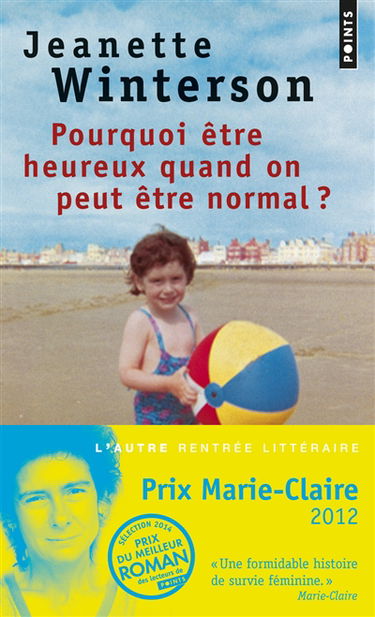
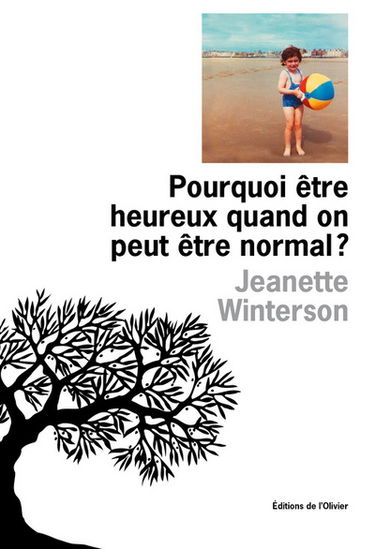
In 1985, at twenty-five, Jeanette published Oranges, the story of a girl adopted by Pentecostal parents, supposed to grow up to be a missionary. Instead, she falls in love with a woman. Disaster. Oranges became an international bestseller, inspired an award-winning BBC adaptation, and was semi-autobiographical. Mrs. Winterson, a thwarted giantess, loomed over the novel and the author's life. When Jeanette left home at sixteen because she was in love with a woman, Mrs. Winterson asked her: Why be happy when you could be normal? This is Jeanette's story--acute, fierce, celebratory--of a life's work to find happiness: a search for belonging, love, identity, a home. About a young girl locked out of her home, sitting on the doorstep all night, and a mother waiting for Armageddon with two sets of false teeth and a revolver in the duster drawer; about growing up in a northern industrial town; about the Universe as a Cosmic Dustbin. It is also about other people's stories, showing how fiction and poetry can form a string of guiding lights, a life raft that supports us when we are sinking.
Extrait
When my mother was angry with me, which was often, she said, ‘The Devil led us to the wrong crib.’
The image of Satan taking time off from the Cold War and McCarthyism to visit Manchester in 1960 – purpose of visit: to deceive Mrs Winterson – has a flamboyant theatricality to it. She was a flamboyant depressive; a woman who kept a revolver in the duster drawer, and the bullets in a tin of Pledge. A woman who stayed up all night baking cakes to avoid sleeping in the same bed as my father. A woman with a prolapse, a thyroid condition, an enlarged heart, an ulcerated leg that never healed, and two sets of false teeth – matt for everyday, and a pearlised set for ‘best’.
I do not know why she didn’t/couldn’t have children. I know that she adopted me because she wanted a friend (she had none), and because I was like a flare sent out into the world – a way of saying that she was here – a kind of X Marks the Spot.
She hated being a nobody, and like all children, adopted or not, I have had to live out some of her unlived life. We do that for our parents – we don’t really have any choice.
She was alive when my first novel,
Oranges Are Not the Only Fruit, was published in 1985. It is semiautobiographical, in that it tells the story of a young girl adopted by Pentecostal parents. The girl is supposed to grow up and be a missionary. Instead she falls in love with a woman. Disaster. The girl leaves home, gets herself to Oxford University, returns home to find her mother has built a broadcast radio and is beaming out the Gospel to the heathen. The mother has a handle – she’s called ‘Kindly Light’.
The novel begins: ‘
Like most people I lived for a long time with my mother and father. My father liked to watch the wrestling, my mother liked to wrestle.’
For most of my life I’ve been a bare-knuckle fighter. The one who wins is the one who hits the hardest. I was beaten as a child and I learned early never to cry. If I was locked out overnight I sat on the doorstep till the milkman came, drank both pints, left the empty bottles to enrage my mother, and walked to school. We always walked. We had no car and no bus money. For me, the average was five miles a day: two miles for the round trip to school; three miles for the round trip to church.
Church was every night except Thursdays.
I wrote about some of these things in
Oranges, and when it was published, my mother sent me a furious note in her immaculate copperplate handwriting demanding a phone call.
We hadn’t seen each other for several years. I had left Oxford, was scraping together a life, and had written
Oranges young – I was twenty-five when it was published.
I went to a phone box – I had no phone. She went to a phone box – she had no phone.
I dialled the Accrington code and number as instructed, and there she was – who needs Skype? I could see her thro