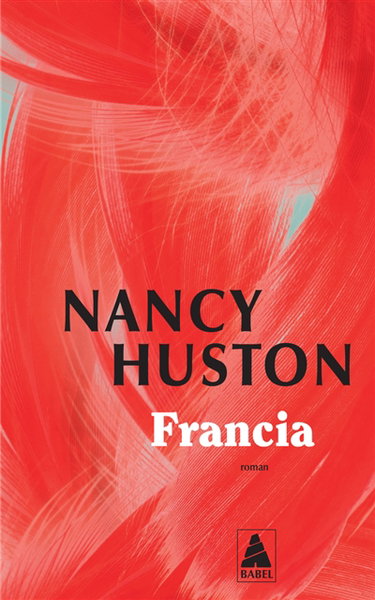
Présentation de l'éditeur
Lin has a husband, two daughters, and close friends. But dance is her passion. Inescapably, it imposes itself upon her, until the inevitable moment when she must choose between her family life and the all-consuming world of dance to which she aches to return.
Slow Emergencies
conveys an irresistible impulse to create, and illustrates the emotional turmoil that ensues for Lin and her family. Nancy Huston, award-winning author of
The Mark of the Angel, writes brilliantly here about the passage of time, the body’s vulnerability, and the solitude of creative endeavor. What results is a deeply felt novel that offers a disquieting but profoundly moving meditation on just what it means to be an artist.
Extrait
PART ONE
The Soloist
That body is out of her.
A girl, say the people whose hands are now skillfully manipulating tiny angular limbs and lumps of glistening sticky buttocks and hairy head down there, then plunging deep into the yawning chasm of Lin's body to extract the black-red pulsating form of living flesh that belongs to no one, neither to her nor to the child -- then they are sewing her.
Lin does not care what they do to her now. That body is out of her. It is on the roof of its empty house and its lips have fastened round her nipple and are sucking fast as heartbeat, fierce as sex. A person behaving like a real live baby and daughtering her. Such a wee wisp of a thing whereas it had weighed like a boulder in her gut. While the wolf was sleeping, bloated and ill from having gobbled down seven baby goats one after the other without so much as bothering to chew them, the nanny goat came to the rescue of her children: she slit open the wolf's stomach with a knife and all seven kids jumped out safe and sound, then they filled his stomach with stones and stitched it back up again and when the wolf awoke, oh my God . . . But here the stone has been replaced by a kid instead of the other way around, and the torn flesh is being sewed up and Lin is a mother. Not only that, but Derek is a father. His nervous futile fanning of her face and smoothing of her hair has ceased; now one of his hands is squeezing hers and he has laid the other gently on his daughter's minute white-clad back. So many monumental new terms coming into play here. A few seconds ago there was no such thing as daughter mother father and now there they are, these words have been violently promoted from cliches to Beethoven symphonies, choirs of angels, floods of sunlight. The nurse is still stitching and dabbing down there, the sting and pierce of the needle are pleasant to Lin, compared with the just-past hellish upheaval of self.
Once rinsed of womb muck and pressed dry with a towel, Angela's fine thin hair is blond. Her head nests in the crook of Lin's left arm as her lips pump imperiously to draw from Lin's breast the thin nourishing liquid which is not yet milk. Her eyes stare into Lin's eyes as though each second of staring brought with it as much newness and replenishment as each second of sucking.
Voraciously Angela gulps down the look in her mother's eyes.
The ward is a swarm of cries and coos and cuddles. Other mothers press small squalling mouths to dripping nipples. Get out of my happiness, thinks Lin.
Angela is the only baby on earth and Lin the only mother.
How could she not know to swab the stub of scabbed flesh at her own daughter's midriff?
In the shower, Lin soaps and scrubs her empty body, vigorously beneath the armpits, gingerly between the legs. She is still there. She did not die or become someone else. Not only is she still herself but she is also a mother. Not only is she still alive but someone else is also, totally, alive at the far end of the corridor and she can feel the tug of that person's life at her heartstrings. It is like falling in love only without the darkness, without the thrill and clutch of fear.
Angela's feet. Those same feet which a thousand times had kicked Lin soft-thud strang