Présentation de l'éditeur
Sampath Chawla was born in a time of drought that ended with a vengeance the night of his birth. All signs being auspicious, the villagers triumphantly assured Sampath's proud parents that their son was destined for greatness.
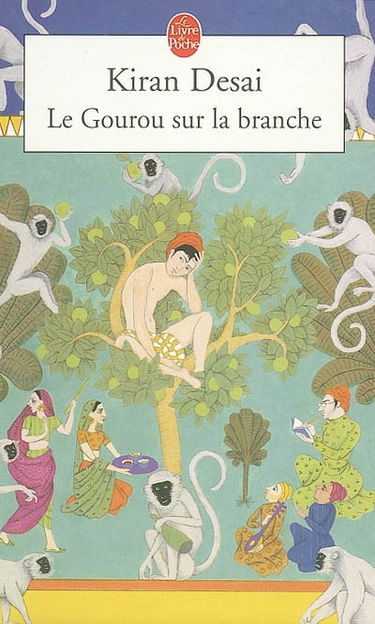
Twenty years of failure later, that unfortunately does not appear to be the case. A sullen government worker, Sampath is inspired only when in search of a quiet place to take his nap. "But the world is round," his grandmother says. "Wait and see! Even if it appears he is going downhill, he will come up the other side. Yes, on top of the world. He is just taking a longer route." No one believes her until, one day, Sampath climbs into a guava tree and becomes unintentionally famous as a holy man, setting off a series of events that spin increasingly out of control. A delightfully sweet comic novel that ends in a raucous bang,
Hullabaloo in the Guava Orchard is as surprising and entertaining as it is beautifully wrought.
Extrait
That summer the heat had enveloped the whole of Shahkot in a murky yellow haze. The clutter of rooftops and washing lines that usually stretched all the way to the foothills at the horizon grew blurred and merged with the dust-filled sky.
'Problems have been located in the cumulus that have become overly heated,' read Mr. Chawla from the newspaper.
'It is all a result of volcanic ash thrown up in the latest spurt of activity in Tierra del Fuego.'
And a little later he reported to whomever might be listening:
'The problem lies in the currents off the West African coastline and the unexplained molecular movement observed in the polar ice-caps.'
And:
'Iraq attempts to steal monsoon by deliberately creating low pressure over desert provinces and deflecting winds from India.'
And even:
'Hungarian musician offers to draw rain clouds from Europe to India via the music of his flute.'
'Why can't they think of serious solutions?' asked Mr. Chawla. 'It is too hot to fool about with Hungarian musicians.'
Shahkot boasted some of the highest temperatures in the country and here there were dozens of monsoon-inducing proposals. Mr. Chawla himself submitted a proposal to the forestry department for the cutting and growing of vegetation in elaborate patterns; the army proposed the scattering and driving of clouds by jet planes flying in a special geometric formation; the police a frog wedding to be performed by temple priests. Vermaji of the university invented a giant fan which he hoped would attract the southern monsoon clouds by creating a wind tunnel moving north toward the Himalayas, and he petitioned the Electricity Supply Board for enough power to test it. Amateur scientists from Mr. Barnala of Tailor Gully to Miss Raina from the Sainik Farms area attended trade fairs where they displayed instruments that emitted magnetic rays and loud buzzing sounds. Everyone in the town was worried. The mercury in the police station thermometer exceeded the gradations Kapoor & Sons Happy Weather Company had seen fit to establish, leaping beyond memory and imagination, and outdoing the predictions of even Mr. Chawla's mother, Ammaji, who liked to think she knew exactly what the future would bring.
It was a summer that sent the dizzy pulse of fever into the sky, in which even rules and laws that usually stood straight and purposeful grew limp, like plants exposed to the afternoon sun, and weak. The heat softened and spread the roads into sticky pools of pitch and melted the grease in the Brigadier's mustache so that it drooped and uncurled, casting shadows on his fine, crisp presence. It burned the Malhotra's daughter far too dark for a decent marriage and caused the water, if it came at all, to spurt, scalding, from the taps. The bees flew drunk on nectar that had turned alcoholic; the policemen slept all day in the banana grove; the local judge bribed an immigration official and left to join his brother in Copenhagen. Foreigners in their tour buses turned and went hom