Présentation de l'éditeur
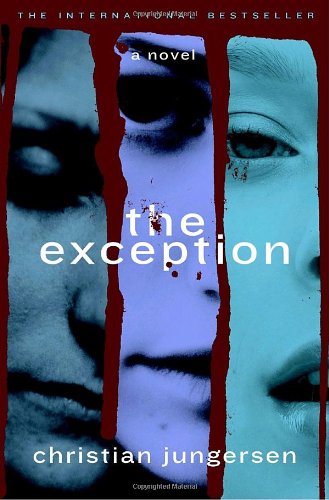
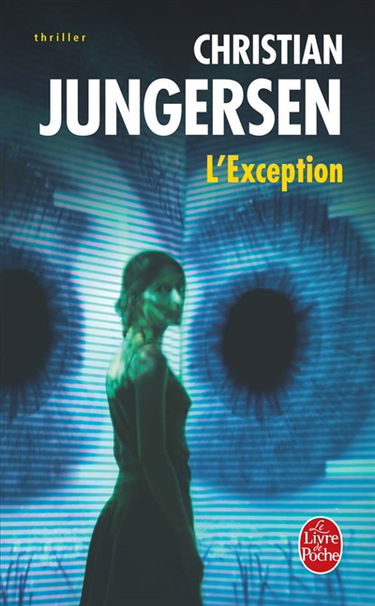
A bestseller throughout Europe, THE EXCEPTION is a gripping dissection of the nature of evil and of the paranoia and obsessions that drive ordinary people to commit unthinkable acts. Four women work together for a small nonprofit in Copenhagen that disseminates information on genocide. When two of them receive death threats, they immediately believe that they are being stalked by Mirko Zigic, a Serbian torturer and war criminal, whom they have recently profiled in their articles. As the tensions mount among the women, their suspicions turn away from Zigic and toward each other. The threats increase and soon the office becomes a battlefield in which each of the women’s move is suspect. Their obsession turns into a witch hunt as they resort to bullying and victimization. Yet these are people who daily analyze cases of appalling cruelty on a worldwide scale, and who are intimate with the psychology of evil. The cruelty which the women have described from a safe distance is now revealed in their own world. They discover that none of them is exactly the person she seems to be. And then they learn that Interpol has traced Mirko Zigic to Denmark.THE EXCEPTION is a unique and intelligent thriller, heralding Christian Jungersen as a gifted storyteller and keen observer of the human psyche.
Extrait
Chapter 1
“Don’t they ever think about anything except killing each other?” Roberto asks. Normally he would never say such a harsh thing.
The truck with the four aid workers and two of the hostage takers on the tailgate has been stopped for an hour or more. Burned–out cars block the road ahead, but it ought to be possible to reverse and outflank them by driving right through the flimsy small shacks.
“I mean, what are we waiting for? Why don’t they just drive on through the crowd?”
Roberto’s English accent is usually perfect, but now, for the first time, you can hear that he is Italian. He is struggling for breath. Sweat pours down his cheeks and into the corners of his mouth.
The slum surrounds them. It smells and looks like a filthy cattle pen. The car stands on a mud surface, still ridged with tracks made after the last rains, now baked as hard as stoneware by the sun. The Nubians have constructed their grayish brown huts from a framework of torn-off branches spread with cow dung. Dense clusters of huts are scattered all over the dusty plain.
Roberto, Iben’s immediate boss, looks at his fellow hostages. “Why can’t they at least pull over into the shade?” He falls silent and lifts his hand very slowly toward the lower rim of his sunglasses.
One of the hostage takers turns his head away from watching the locals to stare at Roberto and shakes his sharpened, one–and–a–half–foot–long panga. It is enough to make Roberto lower his arm with the same measured slowness.
Iben sighs. Drops of sweat have collected in her ears and everything sounds muffled, a bit like the whirring of a fan.
Garbage, mostly rotting green items mixed with human excrement, has piled up against the wall of a nearby cow dung hut. The sloping three–foot–high mound gives off the unmistakable stench of the slum.
“O glorious Name of Jesus, gracious Name,” the youngest of their captors intones. “Name of love and power! Through You, sins are forgiven, enemies are vanquished, the sick…”
Iben looks up at him. He is very different from the child soldiers she wrote about back home in Copenhagen. It’s easy to spot that he is new to all this and caving in under the pressure. Until now he’s been high on some junk, but he’s coming down and terror is tearing him apart. He stands there, his eyes fixed on the sea of people that surrounds the car just a short distance away; a crowd that is growing and becoming better armed with every passing minute.
Tears are running down the boy’s cheeks. He clutches his scratched black machine gun with one hand while his other hand rubs the cross that hangs from a chain around his neck outside his red and blue I L