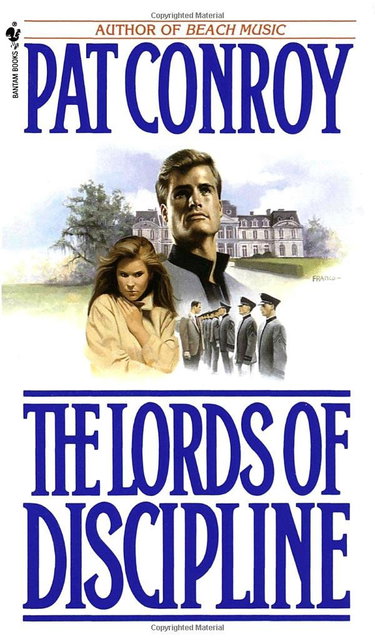
Présentation de l'éditeur A novel you will never forget... This powerful and breathtaking novel is the story of four cadets who have become bloodbrothers. Together they will encounter the hell of hazing and the rabid, raunchy and dangerously secretive atmosphere of an arrogant and proud military institute. They will experience the violence. The passion. The rage. The friendship. The loyalty. The betrayal. Together, they will brace themselves for the brutal transition to manhood... and one will not survive. With all the dramatic brilliance he brought to The Great Santini, Pat Conroy sweeps you into the turbulent world of these four friends -- and draws you deep into the heart of his rebellious hero, Will McLean, an outsider forging his personal code of honor, who falls in love with a whimsical beauty... and who undergoes a transition more remarkable then he ever imagined possible. Extrait Chapter OneWhen I crossed the Ashley River my senior year in my gray 1959 Chevrolet, I was returning with confidence and even joy. I'm a senior now, I thought, looking to my right and seeing the restrained chaste skyline of Charleston again. The gentleness and purity of that skyline had always pleased me. A fleet of small sailboats struggled toward a buoy in the windless river, trapped like pale months in the clear amber of late afternoon. Then I looked to my left and saw, upriver, the white battlements and parapets of Carolina Military Institute, as stolid and immovable in reality as in memory. The view to the left no longer caused me to shudder involuntarily as it had the first year. No longer was I returning to the cold, inimical eyes of the cadre. Now the cold eyes were mine and those of my classmates, and I felt only the approaching freedom that would come when I graduated in June. After a long childhood with an unbenign father and four years at the Institute, I was looking forward to that day of release when I would no longer be subject to the fixed, irresistible tenets of martial law, that hour when I would be presented with my discharge papers and could walk without cadences for the first time.I was returning early with the training cadre in the third week of August. It was 1966, the war in Vietnam was gradually escalating, and Charleston had never looked so beautiful, so untouchable, or so completely mine. Yet there was an oddity about my presence on campus at this early date. I would be the only cadet private in the barracks during that week when the cadre would prepare to train the incoming freshmen. The cadre was composed of the highest-ranking cadet officers and non-coms in the corps of cadets. To them fell the serious responsibility of teaching the freshmen the cheerless rudiments of the fourth-class system during plebe week. The cadre was a diminutive regiment of the elite, chosen for their leadership, their military sharpness, their devotion to duty, their ambition, and their unquestioning, uncomplicated belief in the system.I had not done well militarily at the Institute. As an embodiment of conscious slovenliness, I had been a private for four consecutive years, and my classmates, demonstrating remarkable powers of discrimination, had consistently placed me near the bottom of my class. I was barely cadet material, and no one, including me, ever considered the possibility of my inclusion on the cadre.But in my junior year, the cadets of fourth battalion had surprised both me and the Commandant's Department by selecting me as a member of the honor court, a tribunal of twenty-one cadets known for their integrity, sobriety, and honesty. I may not have worn a uniform well, but I was chock full of all that other stuff. It was the grim, excruciating duty of the honor court to judge the guilt or innocence of their peers accused of lying, stealing, cheating, or of tolerating those who did. Those found guilty of an honor violation were drummed out of the Corps in a dark ceremony of expatriation that had