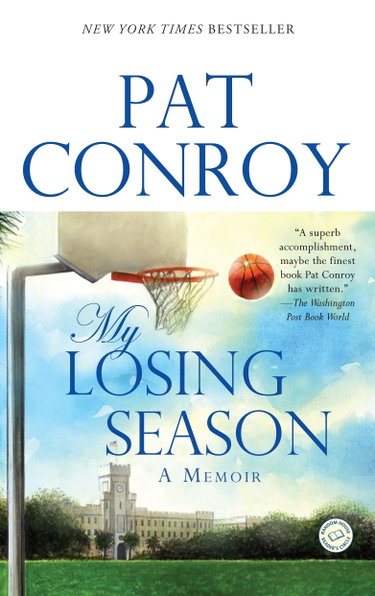
Présentation de l'éditeur
NEW YORK TIMES BESTSELLER • A deeply affecting coming-of-age memoir about family, love, loss, basketball—and life itself—by the beloved author of The Prince of Tides and The Great Santini
During one unforgettable season as a Citadel cadet, Pat Conroy becomes part of a basketball team that is ultimately destined to fail. And yet for a military kid who grew up on the move, the Bulldogs provide a sanctuary from the cold, abrasive father who dominates his life—and a crucible for becoming his own man.
With all the drama and incandescence of his bestselling fiction, Conroy re-creates his pivotal senior year as captain of the Citadel Bulldogs. He chronicles the highs and lows of that fateful 1966–67 season, his tough disciplinarian coach, the joys of winning, and the hard-won lessons of losing. Most of all, he recounts how a group of boys came together as a team, playing a sport that would become a metaphor for a man whose spirit could never be defeated.
Praise for My Losing Season
“A superb accomplishment, maybe the finest book Pat Conroy has written.”—The Washington Post Book World
“A wonderfully rich memoir that you don’t have to be a sports fan to love.”—Houston Chronicle
“A memoir with all the Conroy trademarks . . . Here’s ample proof that losers always tell the best stories.”—Newsweek
“In My Losing Season, Conroy opens his arms wide to embrace his difficult past and almost everyone in it.”—New York Daily News
“Haunting, bittersweet and as compelling as his bestselling fiction.”—Boston Herald
Extrait
chapter 1
Before First Practice
It was on the morning of October 15, 1966, that the final sea-son officially began. For a month and a half, my teammates and I had gathered in the field house to lift weights, do isometric exercises, and scrimmage with each other. Right off, I could tell our sophomores were special and were going to make our team faster, scrappier, and better than the year before. In the heat of September, there was a swiftness and feistiness to the flow of these pickup games that was missing in last year's club. My optimism about the coming season lifted perceptibly as I observed my team beat up on each other in the vagrancy of our uncoached and unmonitored scrimmages.
I could feel the adrenaline rush of excitement begin as I donned my cadet uniform in the dark, and it stayed with me as I marched to mess with R Company. I could barely concentrate on the professors' voices in my classes in Coward Hall as I faced the reality of the new season and stared at the clock with impatience. It was my fourth year at The Citadel and the fourth time October 15 had marked the beginning of basketball practice. Mel Thompson was famous for working his team hard on the first day and traditionally ran us so much that the first practice was topped off by one of us vomiting on the hardwood floor.
I made my way to the locker room early that afternoon because I wanted some time to myself to shoot around and think about what I wanted to accomplish this season. Four of my teammates were already dressed when I entered the dressing room door. The room carried the acrid fragrance of the past three seasons for me, an elixir of pure maleness with the stale smell of sweat predominant yet blended with the sharp, stinging unguents we spread on sore knees and shoulders, Right Guard deodorant spray, vats of foot powder to ward off athlete's foot, and deodorant cakes in the urinals. It was the powerful eau de cologne of the locker room. I realized that my life as a college athlete was coming to its inevitable end, but I did not know that you had to leave the fabulous odors of youth behind when you hurried out into open fields to begin life as an adult.
As I entered the room, I waved to Al Beiner, the equipment manager. He and his assistant Joe "Rat" Eubanks were making sure that the basketballs were all inflated properly. Carl Peterson, another assistant, had just returned with a cartful of freshly laundered t