Présentation de l'éditeur
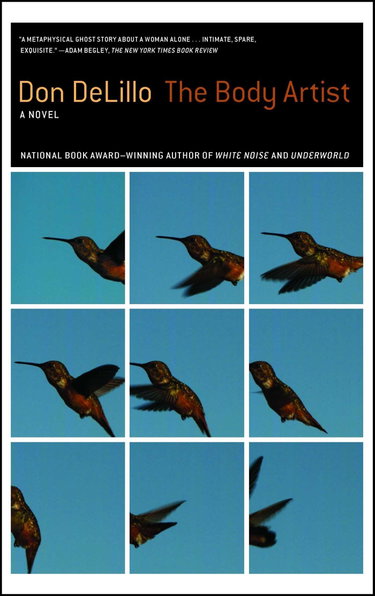
A stunning novel by the bestselling National Book Award–winning author of White Noise and Underworld.
Since the publication of his first novel
Americana, Don DeLillo has lived in the skin of our times. He has found a voice for the forgotten souls who haunt the fringes of our culture and for its larger-than-life, real-life figures. His language is defiantly, radiantly American.
In
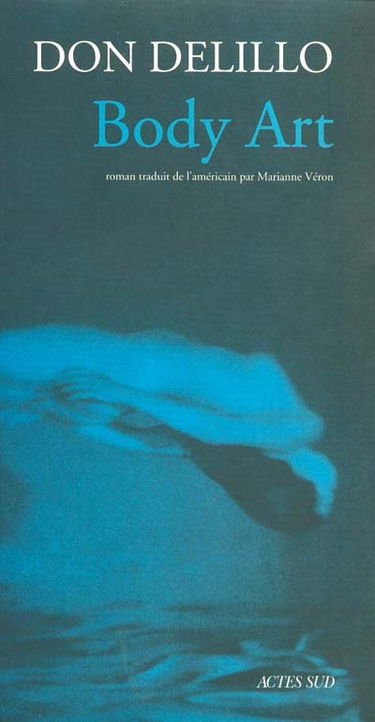
The Body Artist his spare, seductive twelfth novel, he inhabits the muted world of Lauren Hartke, an artist whose work defies the limits of the body. Lauren is living on a lonely coast, in a rambling rented house, where she encounters a strange, ageless man, a man with uncanny knowledge of her own life. Together they begin a journey into the wilderness of time, love and human perception.
The Body Artist is a haunting, beautiful and profoundly moving novel from one of the finest writers of our time.
Extrait
Chapter One
Time seems to pass. The world happens, unrolling into moments, and you stop to glance at a spider pressed to its web. There is a quickness of light and a sense of things outlined precisely and streaks of running luster on the bay. You know more surely who you are on a strong bright day after a storm when the smallest falling leaf is stabbed with self-awareness. The wind makes a sound in the pines and the world comes into being, irreversibly, and the spider rides the wind-swayed web.
It happened this final morning that they were here at the same time, in the kitchen, and they shambled past each other to get things out of cabinets and drawers and then waited one for the other by the sink or fridge, still a little puddled in dream melt, and she ran tap water over the blueberries bunched in her hand and closed her eyes to breathe the savor rising.
He sat with the newspaper, stirring his coffee. It was his coffee and his cup. They shared the newspaper but it was actually, unspokenly, hers.
"I want to say something but what."
She ran water from the tap and seemed to notice. It was the first time she'd ever noticed this.
"About the house. This is what it is," he said. "Something I meant to tell you."
She noticed how water from the tap turned opaque in seconds. It ran silvery and clear and then in seconds turned opaque and how curious it seemed that in all these months and all these times in which she'd run water from the kitchen tap she'd never noticed how the water ran clear at first and then went not murky exactly but opaque, or maybe it hadn't happened before, or she'd noticed and forgotten.
She crossed to the cabinet with the blueberries wet in her hand and reached up for the cereal and took the box to the counter, the mostly brown and white box, and then the toaster thing popped and she flipped it down again because it took two flips to get the bread to go brown and he absently nodded his acknowledgment because it was his toast and his butter and then he turned on the radio and got the weather.
The sparrows were at the feeder, wing-beating, fighting for space on the curved perches.
She reached into the near cabinet for a bowl and shook some cereal out of the box and then dropped the berries on top. She rubbed her hand dry on her jeans, feeling a sense somewhere of the color blue, runny and wan.
What's it called, the lever. She'd pressed down the lever to get his bread to go brown.
It was his toast, it was her weather. She listened to reports and called the weather number frequently and sometimes stood out front and looked into the coastal sky, tasting the breeze for latent implications.
"Yes exactly. I know what it is," he said.
She went to the fridge and opened the door. She stood there remembering something.
She said, "What?" Meaning what did you say, not what did you want to tell me.
She remembered the soya granules. She crossed to the cabinet and took down the box and then caught the fridge door before it swung shut. She reached in for the milk, realizing what it was he'd said that sh