Présentation de l'éditeur
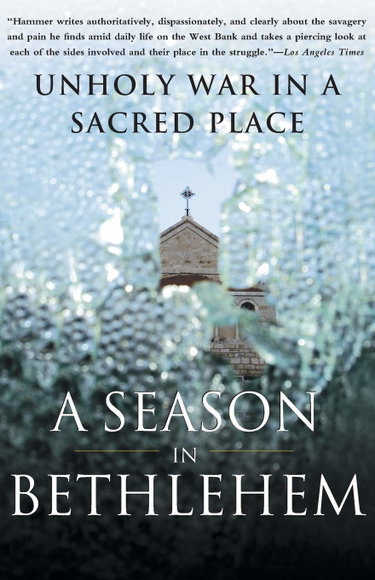
Newsweek's Jerusalem bureau chief Joshua Hammer arrived in the West Bank in October 2000 -- just after Ariel Sharon made his inflammatory visit to the Haram al-Sharif, otherwise known as the Temple Mount. Sharon's trip ignited the worst violence the Middle East had seen in decades. Overnight, the peace process gave way to an ever-worsening cycle of attack, revenge, and retaliation, destabilizing the entire region, killing thousands, and culminating in Israel's reoccupation of Palestinian towns in 2002.
A Season in Bethlehem is the story of one West Bank town's two-year disintegration, as witnessed by a reporter who was there from the beginning. Woven together from Hammer's own firsthand reportage plus hundreds of interviews, it follows a dozen characters whose lives collided on the streets of this biblical city. They include a Bedouin tribesman who rose to become the commander of Bethlehem's most feared and brutal gang of gunmen; the beleaguered governor, an opponent of the al-Aqsa intifada, who believed he had a mandate to stop the violence, only to discover that Yasser Arafat was undermining him; a Christian businesman who watched helplessly as his community was squeezed between Muslim militants and the Israeli army; an eighteen-year-old female honors student turned suicide bomber; and an Israeli reservist, son of a leader of the Peace Now movement, who wrestled with his left-wing convictions as he rode to battle through the predawn streets.
The narrative reaches a climax with a moment-by-moment recreation of the epochal drama that drew many of these characters together: the thirty-nine-day siege of the Church of the Nativity. A clear-eyed chronicle of deepening chaos and violence, in which Hammer lets the opposing sides speak for themselves,
A Season in Bethlehem is both a timely and timeless look at how longstanding religious and political tensions finally boiled over in a place of profound resonance: the birthplace of Jesus.
Extrait
Chapter One: The Camp
He hadn't set out to be a martyr that day, his best friend Sa'ed Ahmad assured me. We were walking through the warrens of Aida refugee camp on a scorching afternoon in July 2002, and I had asked Sa'ed to re-create for me the day that Israeli troops had killed Moayyad al-Jawarish, thirteen, during a clash at Rachel's Tomb, a heavily guarded Jewish holy site located at the northern entrance to Bethlehem. I was investigating the life of a man named Ahmed Mughrabi, one of the most chilling figures in Bethlehem, the leader of a suicide cell that had sent a half dozen teenagers to kill and be killed in Israel. I had traced the story here, to these early days of the al-Aqsa intifada, when Moayyad's death had set in motion a terrible chain reaction of murder and revenge.
Sa'ed was a jug-eared boy of sixteen who lived with his parents in one of those indistinguishable alleys found in refugee camps all over the West Bank and Gaza -- a cramped quarter of ugly cinderblock buildings and kids playing with improvised toys such as unspooled reels of cassette tape that they find lying in the dirt. School was out for the summer when Sa'ed agreed to get into my car and head down the Hebron Road to Rachel's Tomb, a half mile away, to tell me about his friend's final hours.
With everything that's happened in the region since, it is not easy to remember the atmosphere back in those early days of the al-Aqsa intifada -- Moayyad was killed on October 16, 2000 -- when madness, excitement, and the lure of martyrdom swept up the children of the refugee camps. Nearly every day violent clashes erupted at Israeli military checkpoints thrown up at the border between Palestinian- and Israeli-controlled territory: the New City Inn and Qalandia junction in Ramallah, Netzarim junction in Gaza, the entrance to the Abraham Avinu Jewish settlement inside Hebron. Boys as young as five hurled stones and even firebombs at Israeli soldiers. Palestinian security for