Présentation de l'éditeur
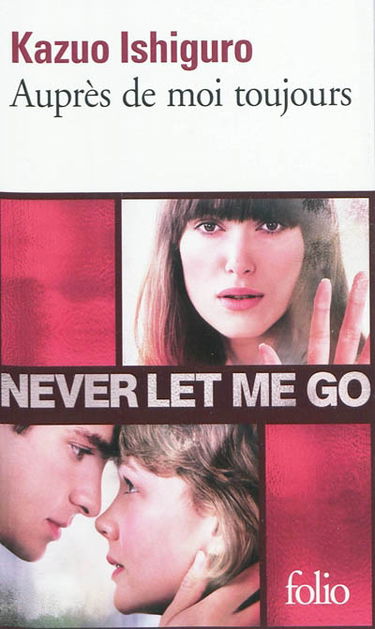
From the acclaimed author of The Remains of the Day and When We Were Orphans, a moving new novel that subtly reimagines our world and time in a haunting story of friendship and love.
As a child, Kathy–now thirty-one years old–lived at Hailsham, a private school in the scenic English countryside where the children were sheltered from the outside world, brought up to believe that they were special and that their well-being was crucial not only for themselves but for the society they would eventually enter. Kathy had long ago put this idyllic past behind her, but when two of her Hailsham friends come back into her life, she stops resisting the pull of memory.
And so, as her friendship with Ruth is rekindled, and as the feelings that long ago fueled her adolescent crush on Tommy begin to deepen into love, Kathy recalls their years at Hailsham. She describes happy scenes of boys and girls growing up together, unperturbed–even comforted–by their isolation. But she describes other scenes as well: of discord and misunderstanding that hint at a dark secret behind Hailsham’s nurturing facade. With the dawning clarity of hindsight, the three friends are compelled to face the truth about their childhood–and about their lives now.
A tale of deceptive simplicity, Never Let Me Go slowly reveals an extraordinary emotional depth and resonance–andtakes its place among Kazuo Ishiguro’s finest work.
Extrait
My name is Kathy H. I’m thirty-one years old, and I’ve been a carer now for over eleven years. That sounds long enough, I know, but actually they want me to go on for another eight months, until the end of this year. That’ll make it almost exactly twelve years. Now I know my being a carer so long isn’t necessarily because they think I’m fantastic at what I do. There are some really good carers who’ve been told to stop after just two or three years. And I can think of one carer at least who went on for all of fourteen years despite being a complete waste of space. So I’m not trying to boast. But then I do know for a fact they’ve been pleased with my work, and by and large, I have too. My donors have always tended to do much better than expected. Their recovery times have been impressive, and hardly any of them have been classified as “agitated,” even before fourth donation. Okay, maybe I am boasting now. But it means a lot to me, being able to do my work well, especially that bit about my donors staying “calm.” I’ve developed a kind of instinct around donors. I know when to hang around and comfort them, when to leave them to themselves; when to listen to everything they have to say, and when just to shrug and tell them to snap out of it.
Anyway, I’m not making any big claims for myself. I know carers, working now, who are just as good and don’t get half the credit. If you’re one of them, I can understand how you might get resentful—about my bedsit, my car, above all, the way I get to pick and choose who I look after. And I’m a Hailsham student—which is enough by itself sometimes to get people’s backs up. Kathy H., they say, she gets to pick and choose, and she always chooses her own kind: people from Hailsham, or one of the other privileged estates. No wonder she has a great record. I’ve heard it said enough, so I’m sure you’ve heard it plenty more, and maybe there’s something in it. But I’m not the first to be allowed to pick and choose, and I doubt if I’ll be the last. And anyway, I’ve done my share of looking after donors brought up in every kind of place. By the time I finish, remember, I’ll have done twelve years of this, and it’s only for the last six they’ve let me choose.
And why shouldn’t they? Carers aren’t machines. You try and do your best for every donor, but in the end, it wears you down. You don’t have unlimited patience and energy. So when you get a chance to choose, of course, you choose your own kind. That’s natural. There’s no way I could have gone on for as long as I have if I’d stopped feel