Présentation de l'éditeur
“Why has all this focus on security made me feel so much more insecure? Nothing is secure. And this is the good news. But only if you are not seeking security as the point of your life.”–Eve Ensler
When her stage play
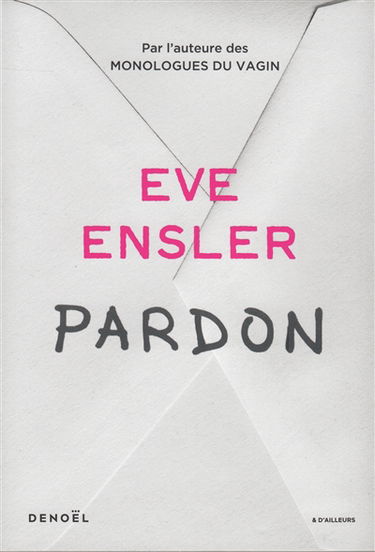
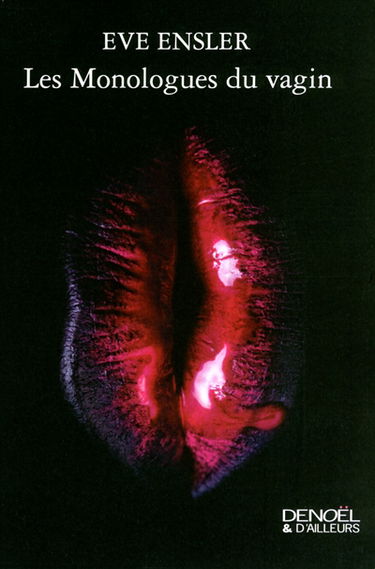
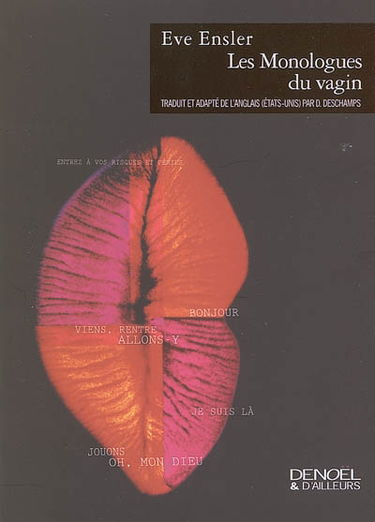
The Vagina Monologues became a runaway hit and an international sensation, Eve Ensler emerged as a powerful voice and champion for women everywhere. Now the brilliant playwright gives us her first major work written exclusively for the printed page. Insecure at Last is a timely and urgent look at our security-obsessed world, the drastic measures taken to keep us safe, and how we can truly experience freedom by letting go of the deceptive notion of vigilant “protection.”
Ensler draws on personal experiences and candid interviews with burka-clad women in Afghanistan; female prisoners in upstate New York; survivors at the Superdome after Katrina; and anti-war activist Cindy Sheehan–sharing unforgettable snapshots that chronicle a post-9/11 existence in which hyped obsession for safety and security has undermined our humanity. The us-versus-them mentality, Ensler explains, has closed our minds and hardened our compassionate hearts.
Provocative, illuminating, inspiring, and boldly envisioned, Insecure at Last challenges us to reconsider what it means to be free, to discover that our strength is not born out of that which protects us. Ensler offers us the opportunity to reevaluate our everyday lives, expose our vulnerability, and, in doing so, experience true freedom and fulfillment.
Extrait
I
DRAWN TO WHAT I FEARED THE MOST
THE FIRST MELTING
It is difficult to determine where any journey really begins. From a very young age, I was suspicious of the promise of security. Walt Disney cartoons and Father Knows Best gave me enormous anxiety. I sensed an underworld that was not being expressed, and the absence of it made me nervous. As a teenager I read two books over and over: Hiroshima and Death Be Not Proud. In the first, John Hersey documents individual accounts of those who survived the first nuclear attack. I remember melting flesh, bookcases crushing an older Japanese man, radiation sickness, hair falling out. In the other book, John Gunther’s son gradually and nobly dies of a brain tumor. I do not know which I feared more, nuclear annihilation or a massive tumor in my brain.
I remember when I became afraid of the dark. It was after I watched the movie The Invisible Man on television. There was something about Claude Rains unwrapping his bandages and revealing that underneath there was nothing, he was nothing. I vomited the whole night. I still feel nauseous thinking about it. The idea of becoming nothing, that we were made of nothing, the dissolution of self, of ego, was then my greatest fear. It was my introduction to death.
The possibility of tumors, disappearance, annihilation, circled my childhood, but it wasn’t until I traveled to a war zone in my early thirties that the abstraction of insecurity became a reality. In spite of even my very difficult childhood, I still lived in a comfortable environment. I had a cozy house on a white middle-class street in the USA. There were no air raids. No curfews. There were no bombs dropping around me. There was no one dragging my mother or sister out to be murdered or raped.
Sometime in 1993 I was walking down a street in Manhattan when I was seized by a photograph on the cover of Newsday—six young Bosnian girls who had just been returned from a rape. A rape camp. A place where soldiers held kidnapped women to serve and pleasure them. A rape camp in 1993. It seemed utterly surreal and impossible. Yet the faces of the girls who had survived indicated the seriousness and reality of the situation. There was something about the anger in their faces, and the shock. There was something about the disassociation and the loss. These girls entered me. Or perhaps they already lived inside me. I knew I had to go and be with them. I didn’t