Présentation de l'éditeur
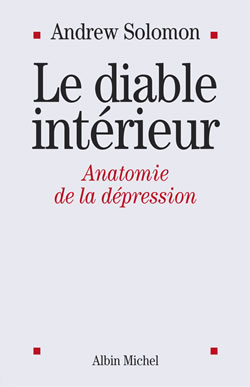
A Scribner Classics edition of Andrew Solomon’s National Book Award-winning, bestselling, and transformative masterpiece on depression—“the book for a generation, elegantly written, meticulously researched, empathetic, and enlightening” (Time)—now with a major new chapter covering recently introduced and novel treatments, suicide and anti-depressants, pregnancy and depression, and much more.
Winner of more than a dozen awards, The Noonday Demon “takes readers on a journey of incomparable range and resonance” (O, The Oprah Magazine), revealing the subtle complexities and sheer agony of depression. Andrew Solomon interviews patients, doctors and scientists, policy makers and politicians, drug designers and philosophers to describe the vast range of available medications, the efficacy of alternative treatments, and the impact the malady has on various demographic populations—around the world and throughout history. He also explores the thorny patch of moral and ethical questions posed by emerging biological explanations for mental illness.
With uncommon humanity, candor, wit, and erudition, The Noonday Demon “is a considerable accomplishment. It is likely to provoke discussion and controversy, and its generous assortment of voices, from the pathological to the philosophical, makes for rich, variegated reading” (The New York Times).
Extrait
Chapter One: Depression
Depression is the flaw in love. To be creatures who love, we must be creatures who can despair at what we lose, and depression is the mechanism of that despair. When it comes, it degrades one's self and ultimately eclipses the capacity to give or receive affection. It is the aloneness within us made manifest, and it destroys not only connection to others but also the ability to be peacefully alone with oneself. Love, though it is no prophylactic against depression, is what cushions the mind and protects it from itself. Medications and psychotherapy can renew that protection, making it easier to love and be loved, and that is why they work. In good spirits, some love themselves and some love others and some love work and some love God: any of these passions can furnish that vital sense of purpose that is the opposite of depression. Love forsakes us from time to time, and we forsake love. In depression, the meaninglessness of every enterprise and every emotion, the meaninglessness of life itself, becomes self-evident. The only feeling left in this loveless state is insignificance.
Life is fraught with sorrows: no matter what we do, we will in the end die; we are, each of us, held in the solitude of an autonomous body; time passes, and what has been will never be again. Pain is the first experience of world-helplessness, and it never leaves us. We are angry about being ripped from the comfortable womb, and as soon as that anger fades, distress comes to take its place. Even those people whose faith promises them that this will all be different in the next world cannot help experiencing anguish in this one; Christ himself was the man of sorrows. We live, however, in a time of increasing palliatives; it is easier than ever to decide what to feel and what not to feel. There is less and less unpleasantness that is unavoidable in life, for those with the means to avoid. But despite the enthusiastic claims of pharmaceutical science, depression cannot be wiped out so long as we are creatures conscious of our own selves. It can at best be contained -- and containing is all that current treatments for depression aim to do.
Highly politicized rhetoric has blurred the distinction between depression and its consequences -- the distinction between how you feel and how you act in response. This is in part a social and medical phenomenon, but it is also the result of linguistic vagary attached to emotional vagary. Perhaps depression can best be described as emotional pain that forces itself on us against our will, and then breaks free of its externals. Dep