Présentation de l'éditeur
In Our Strange Gardens was named a BookSense 76 Recommended Pick for January 2002!
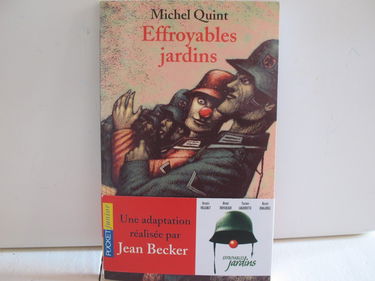
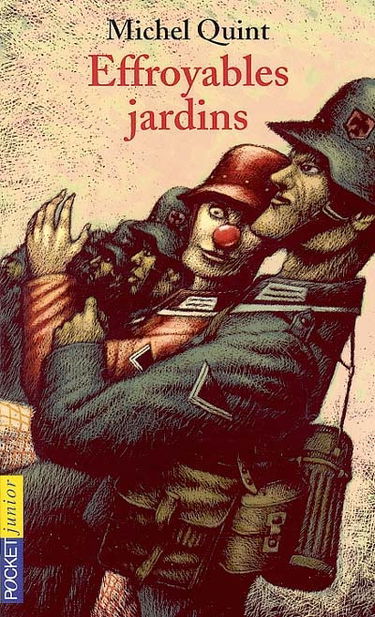
Michel has a story to tell. It's about his father, an exquisitely common man whose very ordinariness is a source of grave embarrassment for the boy. It's also the story told to him by his uncle, who shared a family secret with the child in the flickering black and white images of a Sunday matinee.Years before, in the bitter years of World War II, during the Nazi occupation of France, two brothers found themselves at the mercy of a German guard following an explosive act of resistance. Thrown into a deep pit with a small group of terrified prisoners, the men are told that one of them will die by dawn to serve as an example for the others. It's up to the prisoners to propose who will be sacrificed. But in the middle of the night, the guard returns with an extraordinary proposition of his own.A novel of revelation, innocence and ignorance, of the power of language and the strength and complexity of family, In Our Strange Gardens is a fable of nuance and power, a mesmerizing addition to the literature of war.
Extrait
It was the end of ’42, beginning of ’43. Your father and I, through our small group of Resistance fighters, had been ordered to blow up all the generators in our district, starting with the one at Douai railway station. I never even understood why . . .
He started his little story very mildly, my Gaston. Every so often, with a sort of naive nostalgia, his eyes would wander away from me to the old posters on the wall behind the barto the cowboys and their marvelous wildness, to the wickedly low-cut gowns of the ladies. Burt Lancaster, Virginia Mayo, Elizabeth Taylor, Montgomery Clift, and their pals, all of them heroes, stars to drool over. Which is what I did, together with the more-on-the-ball of my friends. But from that day on, in comparison with Gaston, my father, and Nicole, too, these stars were nothing to me. Just pale mirages.
Outside it was sunny. But Gaston was talking of a time when darkness was strongest. And now he was coming to the point:
The last traces of winter. As it is in these parts. Damp, cold, rainy, and not much light. And on top of that, the war, the bereavements, the restrictions, and the feeling that humiliation was here to stay. But don’t get me wrongalthough people were pretty fed up, they did their best not to knuckle under. That included us. I mean, we joined the Resistance. I don’t know about anybody else, but your father and I did it for a lark, just for something to do, that’s how it was at first at any rate . . . The same way we might have gone to a dance. But what with the atmosphere, the “Horst Wessel Song,” the military bands, we didn’t feel much like dancing. So we sabotaged the generator at Douai station, your father and I, to make some music of our own. A few touches on the right keys and bingo, a little night music. One evening just after dark. Without worrying much about it, without taking precautions. Just wearing the leather jackets electricians wear and carrying toolbags full of explosives. That seemed to us the best camouflage. We didn’t really think.
Wham! We were melting back into the landscape through the back roads when we heard the explosion behind us. We said the usual things: just like fireworks, and so on. Right, we said, we did it! And we went home and had a good night’s sleep. Didn’t even catch a cold!
For a while we thought we’d gotten away with it, as often happens, just because we hadn’t taken any precautions. Like with the lottery: you only hit the jackpot when you don’t care if you win or lose. See what I mean?
Anyhow, we hit the jackpot twice over that time! Once on the evening when we didn’t get caught, and then later on . . .
We were picked up the next morning down in the cellar. The cellar belonging to your grandparents, your mother’s father and mother. Among all the jars of jam and gherkins. A real treasure trove. You can laugh, but the