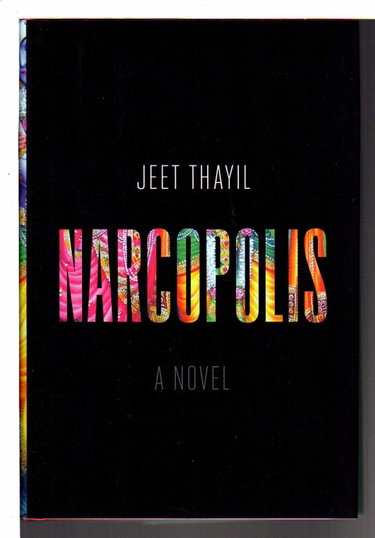
Présentation de l'éditeur
Shortlisted for the 2012 Man Booker Prize
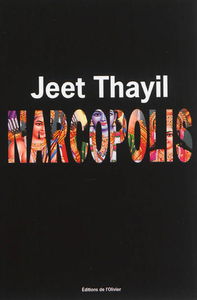
Jeet Thayil’s luminous debut novel completely subverts and challenges the literary traditions for which the Indian novel is celebrated. This is a book about drugs, sex, death, perversion, addiction, love, and god, and has more in common in its subject matter with the work of William S. Burroughs or Baudelaire than with the subcontinent’s familiar literary lights. Above all, it is a fantastical portrait of a beautiful and damned generation in a nation about to sell its soul. Written in Thayil’s poetic and affecting prose, Narcopolis charts the evolution of a great and broken metropolis.
Narcopolis opens in Bombay in the late 1970s, as its narrator first arrives from New York to find himself entranced with the city’s underworld, in particular an opium den and attached brothel. A cast of unforgettably degenerate and magnetic characters works and patronizes the venue, including Dimple, the eunuch who makes pipes in the den; Rumi, the salaryman and husband whose addiction is violence; Newton Xavier, the celebrated painter who both rejects and craves adulation; Mr. Lee, the Chinese refugee and businessman; and a cast of poets, prostitutes, pimps, and gangsters.
Decades pass to reveal a changing Bombay, where opium has given way to heroin from Pakistan and the city’s underbelly has become ever rawer. Those in their circle still use sex for their primary release and recreation, but the violence of the city on the nod and its purveyors have moved from the fringes to the center of their lives. Yet Dimple, despite the bleakness of her surroundings, continues to search for beauty—at the movies, in pulp magazines, at church, and in a new burka-wearing identity.
After a long absence, the narrator returns in 2004 to find a very different Bombay. Those he knew are almost all gone, but the passion he feels for them and for the city is revealed.
Extrait
Prologue: Something for the Mouth
Bombay, which obliterated its own history by changing its name and surgically altering its face, is the hero or heroin of this story, and since I'm the one who's telling it and you don't know who I am, let me say that we'll get to the who of it but not right now, because now there's time enough not to hurry, to light the lamp and open the window to the moon and take a moment to dream of a great and broken city, because when the day starts its business I'll have to stop, these are nighttime tales that vanish in sunlight, like vampire dust—wait now, light me up so we do this right, yes, hold me steady to the lamp, hold it, hold, good, a slow pull to start with, to draw the smoke low into the lungs, yes, oh my, and another for the nostrils, and a little something sweet for the mouth, and now we can begin at the beginning with the first time at Rashid's when I stitched the blue smoke from pipe to blood to eye to I and out into the blue world—and now we're getting to the who of it and I can tell you that I, the I you're imagining at this moment, a thinking someone who's writing these words, who's arranging time in a logical chronological sequence, someone with an overall plan, an engineer-god in the machine, well, that isn't the I who's telling this story, that's the I who's being told, thinking of my first pipe at Rashid's, trawling my head for images, a face, a bit of music, or the sound of someone's voice, trying to remember what it was like, the past, recall it as I would the landscape and light of a foreign country, because that's what it is, not fiction or dead history but a place you lived in once and cannot return to, which is why I'm trying to remember how it was that I got into trouble in New York and they sent me back to Bombay to get straight, how I found Rashid's, and how, one afternoon, I took a taxi through roads mined with garbage, with human and animal debris, and the poor, everywhere the poor and deranged stumbled in their rags or stood and stared, and I saw noth