Présentation de l'éditeur
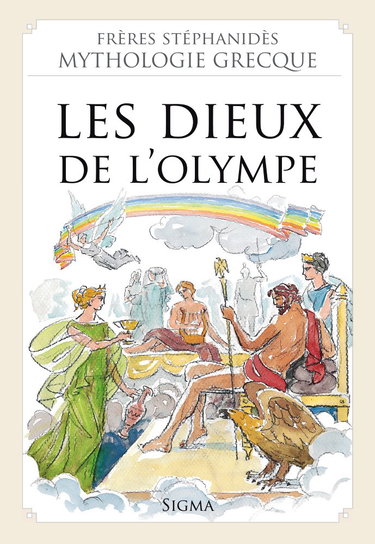
“The crags of Olympus stand silent and bare, scoured by the icy winds. The halls of the gods are as if they had never been.” This sequel to 'The Gods of Olympus' takes the reader from the birth of mankind to the passing of the ancient religion of the Greeks. Names and events which have become a part of the western world’s identity are brought to vivid life in these pages: how Prometheus brought the gift of fire to men; the tale of Pandora’s box; the story behind 'the Midas touch'; the boy on the dolphin; the origin of 'tantalize'; the sad end of Icarus, who literally burnt his wings; how the Peloponnese came by its name and Europa gave hers to a continent. Here are love’s labours lost in the tragic myth of Orpheus and his Eurydice, and love lent wings in the story which has given us our 'halcyon days'. The gods of the Greeks may have vanished in the mists of time, yet their legacy lives on undimmed.
Biographie de l'auteur
Menelaos Stephanides (1923-2007), the author of 'Greek Mythology series', originally studied economics in Athens but his main preoccupation was writing. For more than twenty-five years he concentrated, with great success, on the retelling of ancient Greek myths, tirelessly studying the source materials to achieve his literary version of the many stories. Working with his brother, the artist and illustrator Yannis Stephanides, he wrote and published the 18-volume series 'Greek Mythology' for children, which was translated into several languages and later reissued as a pocket book for older readers. He then turned his attention to more recent Greek tradition, studying hundreds of folk tales the most appealing of which he retold in the highly successful 10-volume series 'Folk Tales from Greece'. Menelaos Stephanides' name is now familiar in many parts of the world, thanks to the translation of both his mythology and the folk tales into several foreign languages. In 1989 his book 'Jason and the Argonauts' was awarded two Pier Paolo Vergerio honourable distinctions by the University of Padua, while in 1998 his entire published work was recommended by the Hellenic Ministry of Education for inclusion in school libraries, having already long been recognised as a source of reference for publishers, the reading public and educationalists.