Présentation de l'éditeur
William Trevor's Last Stories is forthcoming from Viking.
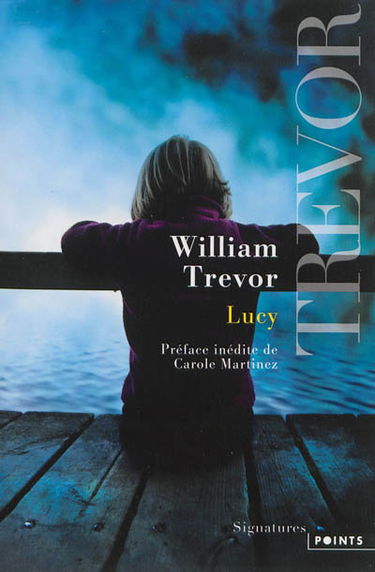
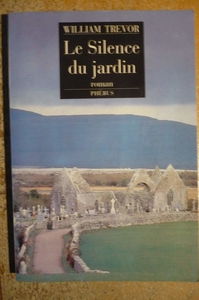
The stunning new novel from highly acclaimed author William Trevor is a brilliant, subtle, and moving story of love, guilt, and forgiveness. The Gault family leads a life of privilege in early 1920s Ireland, but the threat of violence leads the parents of nine-year-old Lucy to decide to leave for England, her mother's home. Lucy cannot bear the thought of leaving Lahardane, their country house with its beautiful land and nearby beach, and a dog she has befriended. On the day before they are to leave, Lucy runs away, hoping to convince her parents to stay. Instead, she sets off a series of tragic misunderstandings that affect all of Lahardane's inhabitants for the rest of their lives.
Extrait
Captain Everard Gault wounded the boy in the right shoulder on the night of June the twenty-first, nineteen twenty-one. Aiming above the trespassers' heads in the darkness, he fired the single shot from an upstairs window and then watched the three figures scuttling off, the wounded one assisted by his companions.
They had come to fire the house, their visit expected because they had been before. On that occasion they had come later, in the early morning, just after one. The sheepdogs had seen them off, but within a week the dogs lay poisoned in the yard and Captain Gault knew that the intruders would be back. 'We're stretched at the barracks, sir,' Sergeant Talty had said when he came out from Enniseala. 'Oh, stretched shocking, Captain.' Lahardane wasn't the only house under threat; every week somewhere went up, no matter how the constabulary were spread. 'Please God, there'll be an end to it,' Sergeant Talty said, and went away. Martial law prevailed, since the country was in a state of unrest, one that amounted to war. No action was taken about the poisoning of the dogs.
When daylight came on the morning after the shooting, blood could be seen on the sea pebbles of the turn-around in front of the house. Two petrol tins were found behind a tree. The pebbles were raked, a couple of bucketfuls that had been discoloured in the accident taken away.
Captain Gault thought it would be all right then: a lesson had been learnt. He wrote to Father Morrissey in Enniseala, asking him to pass on his sympathy and his regret if the priest happened to hear who it was who'd been wounded. He had not sought to inflict an injury, only to make it known that a watch was being kept. Father Morrissey wrote back. He was always the wild one in that family, he concluded his comments on the event, but there was an awkwardness about his letter, about the choice of phrases and of words, as if he found it difficult to comment on what had occurred, as if he didn't understand that neither death nor injury had been intended. He had passed the message on, he wrote, but no acknowledgement had come back from the family he referred to.
Captain Gault had been wounded himself. For six years, since he had come back an invalid from the trenches, he had carried fragments of shrapnel in his body, and they would always be there now. His injury at that time had brought his military career to an end: he would remain forever a captain, which was intensely a disappointment, since he had always imagined achieving much higher rank. But he was not, in other ways, a disappointed man. There was the great solace of his happy marriage, of the child his wife, Heloise, had borne him, of his house. There was no other place he might more happily have lived than beneath the slated roof of its three grey storeys, the stone softened by the white woodwork of the windows and the delicate fanlight above a white hall door. Flanking it on its right was the wide high archway of a cobbled yard, with cobbled passageways leading to an apple orchard and a garden. One half of the circle on to which the front rooms looked out was the gravel sweep; the other was a raised lawn that was separated from steeply rising woods by a