Présentation de l'éditeur
Panoramic in scope,
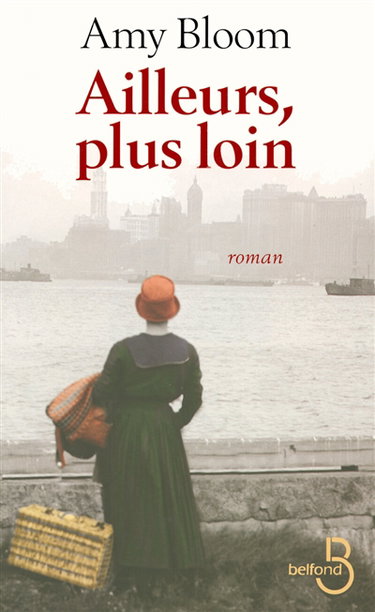
Away is the epic and intimate story of young Lillian Leyb, a dangerous innocent, an accidental heroine. When her family is destroyed in a Russian pogrom, Lillian comes to America alone, determined to make her way in a new land. When word comes that her daughter, Sophie, might still be alive, Lillian embarks on an odyssey that takes her from the world of the Yiddish theater on New York’s Lower East Side, to Seattle’s Jazz District, and up to Alaska, along the fabled Telegraph Trail toward Siberia. All of the qualities readers love in Amy Bloom’s work–her humor and wit, her elegant and irreverent language, her unflinching understanding of passion and the human heart–come together in the embrace of this brilliant novel, which is at once heartbreaking, romantic, and completely unforgettable.
From the Hardcover edition.
Extrait
Chapter 1
And Lost There, a Golden Feather in a Foreign, Foreign Land
It is always like this: the best parties are made by people in trouble.
There are one hundred and fifty girls lining the sidewalk outside the Goldfadn Theatre. They spill into the street and down to the corners and Lillian Leyb, who has spent her first thirty-five days in this country ripping stitches out of navy silk flowers until her hands were dyed blue, thinks that it is like an all-girl Ellis Island: American-looking girls chewing gum, kicking their high heels against the broken pavement, and girls so green they’re still wearing fringed brown shawls over their braided hair. The street is like her village on market day, times a million. A boy playing a harp; a man with an accordion and a terrible, patchy little animal; a woman selling straw brooms from a basket strapped to her back, making a giant fan behind her head; a colored man singing in a pink suit and black shoes with pink spats; and tired women who look like women Lillian would have known at home in Turov, smiling at the song, or the singer. Some of the girls hold red sparklers in their hands and swing one another around the waist. A big girl with black braids plays the tambourine. A few American-looking girls make a bonfire on the corner, poking potatoes in and out of it. Two older women, pale and dark-eyed, are pulling along their pale, dark-eyed children. That’s a mistake, Lillian thinks. They should ask a neighbor to watch the children. Or just leave the children in Gallagher’s Bar and Grille at this point and hope for the best, but that’s the kind of thing you say when you have no child. Lillian makes herself smile at the children as she walks past the women; they reek of bad luck.
Lillian is lucky. Her father had told her so; he told everyone after she fell in the Pripiat twice and didn’t drown and didn’t die of pneumonia. He said that smart was good (and Lillian was smart, he said) and pretty was useful (and Lillian was pretty enough) but lucky was better than both of them put together. He had hoped she’d be lucky her whole life, he said, and she had been, at the time.
He also said, You make your own luck, and Lillian takes Judith, the only girl she knows, by the hand and they push their way through the middle of the crowd and then to the front. They are pushed themselves, then, into the place they want to be, the sewing room of the Goldfadn Theatre. They find themselves inches away from a dark, angry woman with a tight black bun (“Litvak,” Judith says immediately; her mother was a Litvak).
Suddenly, there are two men right in front of them, who, even the greenest girls can see, are stars in the firmament of life, visitors from a brighter, more beautiful planet. Mr. Reuben Burstein, owner of the Goldfadn and the Bartelstone theaters, the Impresario of Second Avenue, with his barrel chest and black silk vest and gray hair brushed back like Beethoven’s. And his son, Mr. Meyer Burstein, the Matinee Idol, the man whose Yankl in The Child of Nature was so tragically handsome, so forceful a dancer, so sweet a tenor,