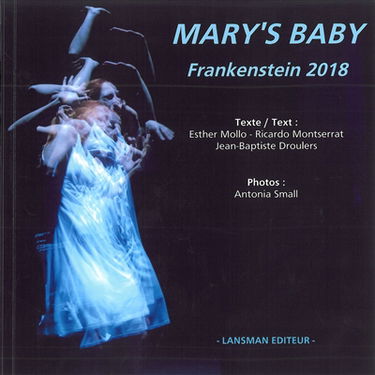
En tant que femme et artiste, c'est tout d'abord la femme qui a attiré mon attention. Mary Shelley fut une femme au destin exceptionnel, fille de William Godwin, grande figure du radicalisme libertaire de la fin du 18e siècle et de Mary Wollstonkraft, essayiste pré-féministe et auteure du célèbre « a vindication of rights of woman ».
Cette Anglaise du début du 19e siècle pose au centre de son oeuvre la question fondamentale de tout artiste : la création et le rapport du créateur avec l'oeuvre, la pérennité et l'indépendance de cette dernière.
« Toutes les nuits une fièvre lente m'oppressait [...] je ne pouvais arracher mon esprit à mon travail dont l'emprise sur mon imagination était irrésistible [...] la vie et la mort m'apparaissaient comme les limites idéales que je devrais d'abord franchir pour déverser sur notre monde un torrent de lumière... »
Ainsi s'exprime par la plume de Mary Shelley, Victor Frankenstein faisant le récit de la fabrication de son monstre. Ne peut-on mieux exprimer la puissance de ce que Freud appelait la « pulsion épistémologique », le désir de savoir ?
Chez Mary, création rime avec transgression et avec corps. C'est en transgressant les règles de la nature que l'acte créatif se déploie et son objet est bel et bien le corps morcelé et fictif. Pour moi qui viens du théâtre physique, des enseignements d'Etienne Decroux, cela ne peut que résonner très fortement et constituer un champ d'investigation des plus fascinants.
As a woman and as an artist, it was first and foremost the woman, Mary Shelley, I was drawn to. Shelley was born to an exceptional fate, daughter of William Godwin, a major figure of the radical libertarianism at the end of the 18th century, and Mary Wollstonecraft, essayist, early feminist and author of the celebrated manifesto, « A Vindication of Rights of Woman. »
This Englishwoman of the early 19th century, proposes, at the heart of her work, the fundamental conundrum for every artist: what is the relationship between creator and the creation, how long will the work itself endure and will it maintain independence from its creator ?
« Every night a slow fever oppressed me [...] I could not free myself from the hold my work had upon me, such was its power over my imagination [...] it seemed that life and death were to be the outer extremes of what I had to pass through to reach the stage where I could the pour forth a torrent of light upon the world. »
Mary Shelley penned these words to express the feeling Victor Frankenstein had describing the creation of his monster. How better could we express the power of what Freud called the « epistemological drive, » the desire to know ?
For Mary, creation is found in pairing transgression with the body. Her creative act erupts by breaking the rules of nature, and at the center of her exploration lies the body. For me, a student of theater focused on the body, and the teachings of Etienne Decroux, I find this a fascinating point of departure for my own investigations. Here we have a body fragmented and fictitious.